Shetland Sheepdog
Shetland Sheepdog is a small herding breed from Scotland also known as Sheltie.
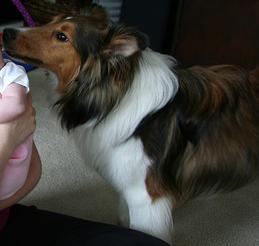
Breed overview
Shetland Sheepdog is a small herding breed from Scotland also known as Sheltie.
Hailing from the Shetland Islands (Scotland), Shelties were bred small to manage livestock on sparse pastures and also serve as farmyard guardians. Often thought of as "miniature Collies," they indeed share ancestry with the Collie but developed separately to their smaller size.
People looking into Shetland Sheepdog usually prepare for High exercise needs, High grooming needs, 15–25 lbs • 13–16 in.
History and origin
Shetland Sheepdog is tied to originating from Scotland, specifically Shetland Islands, with sources often placing its development around 1700 CE.
Shetland Sheepdog is described here as placed in the Herding group and marked as an established breed.
Hailing from the Shetland Islands (Scotland), Shelties were bred small to manage livestock on sparse pastures and also serve as farmyard guardians. Often thought of as "miniature Collies," they indeed share ancestry with the Collie but developed separately to their smaller size.
Quick facts
Traits and day-to-day fit
Coat and classification
Shetland Sheepdog is grouped here with these coat and texture descriptors.
Shetland Sheepdog is also listed as recognized by these kennel-club organizations.
Appearance and build
- Small, refined version of Rough Collie
- Long, straight harsh outer coat with thick undercoat
- Various color patterns (sable, tri-color, blue merle)
- Alert expression with almond-shaped eyes
What this breed is known for
- Hailing from the Shetland Islands (Scotland), Shelties were bred small to manage livestock on sparse pastures and also serve as farmyard guardians. Often thought of as "miniature Collies," they indeed share ancestry with the Collie but developed separately to their smaller size.
- They have a long, straight, harsh outer coat and a dense undercoat, appearing in sable, tricolor, blue merle and black with white/tan markings.
- Highly intelligent, agile, and eager to please, Shetland Sheepdogs excel in obedience and agility trials.
Health and care notes
Shetland Sheepdog is noted here for High exercise needs and High grooming needs.
- Collie Eye Anomaly
- Hip Dysplasia
- Thyroid Problems
- Von Willebrand Disease
Coat details: Long, Double, Weather Resistant
These are informational breed-guide notes, not veterinary advice.
Frequently asked questions
Where does the Shetland Sheepdog come from?
Shetland Sheepdog is closely associated with Scotland, especially Shetland Islands in the sources used for this page.
How big does a Shetland Sheepdog get?
Typical size details for Shetland Sheepdog on this page are 15–25 lbs, 13–16 in, 12–14 years.
What is the Shetland Sheepdog known for?
Hailing from the Shetland Islands (Scotland), Shelties were bred small to manage livestock on sparse pastures and also serve as farmyard guardians. Often thought of as "miniature Collies," they indeed share ancestry with the Collie but developed separately to their smaller size.
Sources and citations
-
American Kennel Club breed profile
American Kennel Club
-
Royal Kennel Club breed profile
The Royal Kennel Club
-
Royal Kennel Club breed standard
The Royal Kennel Club • Breed standard
-
Shetland Sheepdog reference page
Wikipedia
Use the linked breed directories and standards for deeper reference. Breed guides are informational and do not replace veterinary or breeder advice.