Rottweiler
Rottweiler is a large working breed from Germany also known as Rottie.
Breed overview
Rottweiler is a large working breed from Germany also known as Rottie.
Descended from ancient Roman drover dogs, modern Rottweilers were developed in the German town of Rottweil to herd livestock and pull butcher's carts.
People looking into Rottweiler usually prepare for Moderate exercise needs, Low grooming needs, 80–135 lbs • 22–27 in.
History and origin
Rottweiler is tied to originating from Germany, specifically Rottweil, with sources often placing its development around 70 CE.
Rottweiler is described here as placed in the Working group and marked as an established breed.
Descended from ancient Roman drover dogs, modern Rottweilers were developed in the German town of Rottweil to herd livestock and pull butcher's carts.
Quick facts
Traits and day-to-day fit
Coat and classification
Rottweiler is grouped here with these coat and texture descriptors.
Rottweiler is also listed as recognized by these kennel-club organizations.
Appearance and build
- Powerful, muscular build
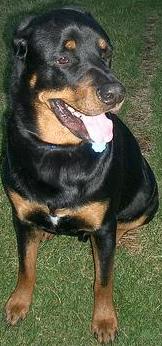
- Short black coat with rust/mahogany markings
- Broad head with medium-length muzzle
- Naturally bobbed or docked tail in some regions
What this breed is known for
- Descended from ancient Roman drover dogs, modern Rottweilers were developed in the German town of Rottweil to herd livestock and pull butcher's carts.
- They are robust and powerful, with a short black coat and clearly defined rust markings. Historically docked tails (in some countries) and a broad chest contribute to their imposing presence.
- Rottweilers are confident, calm, and devoted to their families. They can be aloof with strangers and have natural guarding instincts.
Health and care notes
Rottweiler is noted here for Moderate exercise needs and Low grooming needs.
- Hip Dysplasia
- Elbow Dysplasia
- Heart Conditions
- Bloat
Coat details: Short, Double
These are informational breed-guide notes, not veterinary advice.
Frequently asked questions
Where does the Rottweiler come from?
Rottweiler is closely associated with Germany, especially Rottweil in the sources used for this page.
How big does a Rottweiler get?
Typical size details for Rottweiler on this page are 80–135 lbs, 22–27 in, 9–10 years.
What is the Rottweiler known for?
Descended from ancient Roman drover dogs, modern Rottweilers were developed in the German town of Rottweil to herd livestock and pull butcher's carts.
Sources and citations
-
American Kennel Club breed profile
American Kennel Club
-
Royal Kennel Club breed profile
The Royal Kennel Club
-
Royal Kennel Club breed standard
The Royal Kennel Club • Breed standard
-
Rottweiler reference page
Wikipedia
Use the linked breed directories and standards for deeper reference. Breed guides are informational and do not replace veterinary or breeder advice.